I'm digging deep in agentic builds
- 2026 →Organizer · Frontier Creatives
- 2025 →Founder · Moodiboard
- 2021–25Founding Product Designer · Smash.technology
- 2020–21Design Methods TA · UW iSchool
Community
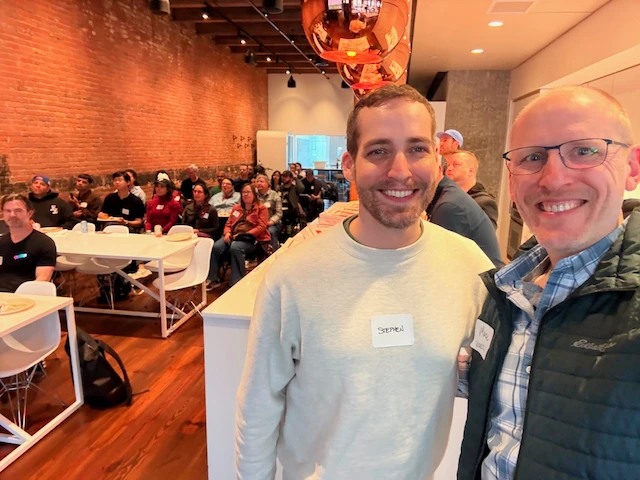
I founded Frontier Creatives, Seattle's first recurring monthly event for designers working with AI. We meet at Pioneer Square Labs. The premise is simple: designers who are actually building with AI, in a room together once a month
Currently
Since January 2026, building Moodiboard: a living art platform where real-time signals drive generative visuals. Sleep, weather, your schedule. Art that shifts with your day rather than demanding your attention. Selectively open, looking for teams working at the edge of AI and product design
How I work
I've always seen faces in things. Wood panelling, floor tiles, the front of a car. I still do. It's the same instinct that makes me think about the person at the other end of a design before I think about the design itself
I'm a systems thinker first. Before I get close to visual decisions I want to understand the interactions, the constraints, the questions worth asking. Research isn't a phase for me, it's how I find out what I should actually be building. People don't use tools to look at them; they use tools to accomplish something. Their goal is the goal, not our tools
The UW and iSchool raised my standard of excellence. I spent my time there less as a student and more as someone trying to find the best mind on campus for whatever I needed to understand: different schools, PhD students, researchers, professors I sought out rather than was assigned. I left knowing what world-class looks like, which I've been working toward ever since
Tools and methods
- Product design. End-to-end flows, spec writing, shipping with engineers
- Design systems. Component libraries, token architecture, documentation that developers actually read
- Research. Interviews, usability testing, synthesis, journey mapping
- Tools. Claude · Figma · Adobe Creative Suite · v0 · Flux.1 · Linear
- AI and emerging. Actively developing AI-integrated design workflows. Regular at Seattle AI and product-design events